
AI-Augmented Data Architecture
Data architecture holds the enterprise's hardest translation problem: what the business means by "Customer" versus what a dozen systems store. Leaders ask where an entity comes from, who owns it, and what a platform change puts at risk. We help your architects answer from a model built from your schemas, glossaries and spreadsheets, using AI on your Sparx EA repository.
Build the data picture from the schemas and glossaries you already have
The definitions are scattered across database schemas, business glossaries and spreadsheets. The old way gathers them into the model one entity at a time. The modern way reads them and lets the model hold the links between business meaning and physical storage.
- Entity definitions are reconciled by phone and spreadsheet before modeling can begin
- Conceptual, logical and physical models are transcribed from schemas and glossaries
- Lineage is traced from source system to report one entity at a time
- Owners, classifications and retention periods are chased down at audit time
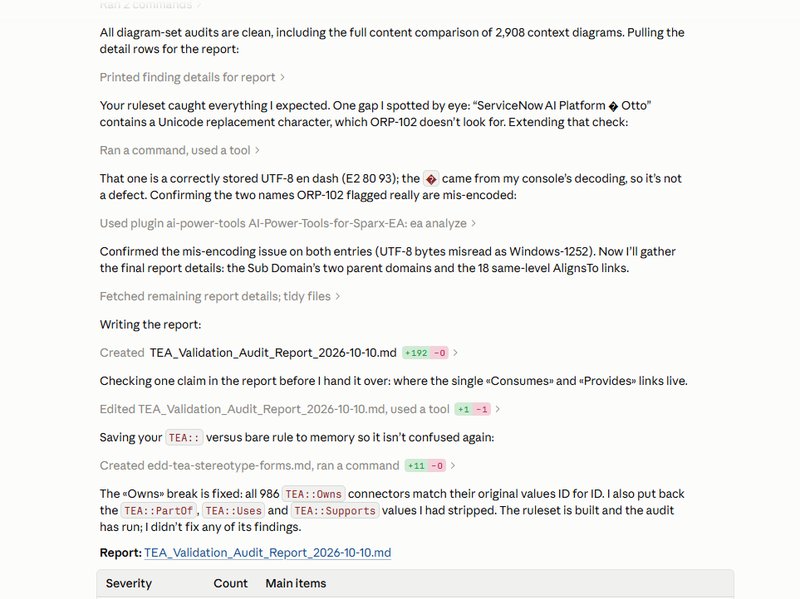
- AI reads live database schemas, glossaries and spreadsheets into stereotyped entities at the conceptual, logical and physical levels
- Traceability links the three levels, so a business term reaches the tables that store it
- Which applications produce and consume an entity, and the lineage from source to report, can be queried from the model
- The architect confirms what each entity means and what its metadata should say
Where AI lands in data architecture work
These are the four use cases behind AI-Augmented Architecture, applied to a data practice.
Build the landscape as data
Turn spreadsheets, glossaries, and live database schemas into properly stereotyped, connected entities at the conceptual, logical, and physical levels, in your MDG, with traceability linking the levels. Reverse-engineer what exists before designing what should.
AnalysisRead the data landscape
Discover which applications produce and consume an entity, trace lineage from source system to report, and surface data at risk because the platform beneath it is at risk, enterprise-wide. The model ties the repository to the schemas, glossaries and spreadsheets around it, and to the regulations the data falls under.
GovernanceKeep the metadata trustworthy
Check that critical data elements carry their required metadata (owner, classification, retention, lineage) before they reach "Approved." For BCBS 239, GDPR, and similar regimes, confirm the documentation is complete and meets the standard, without a manual hunt at audit time.
Stakeholder EngagementPut data reach in business hands
Turn the governed model into business-readable views and plain-language answers to questions like "which business-critical entities have no documented owner?" and "what would a data-warehouse migration affect?" The CDO, owners, and stewards get architecture data without EA licenses or modeling training.
What a data architect can now get done
With AI-Augmented Architecture, a data architect hands over the database schemas, glossaries and spreadsheets, gives the instructions in a prompt, and reviews the data model that comes back.
In Ryan Schmierer's experience, most of a data architect's week goes to gathering definitions and reconciling what each system means. That is the time left for deciding what an entity means.




Reverse-engineering what exists
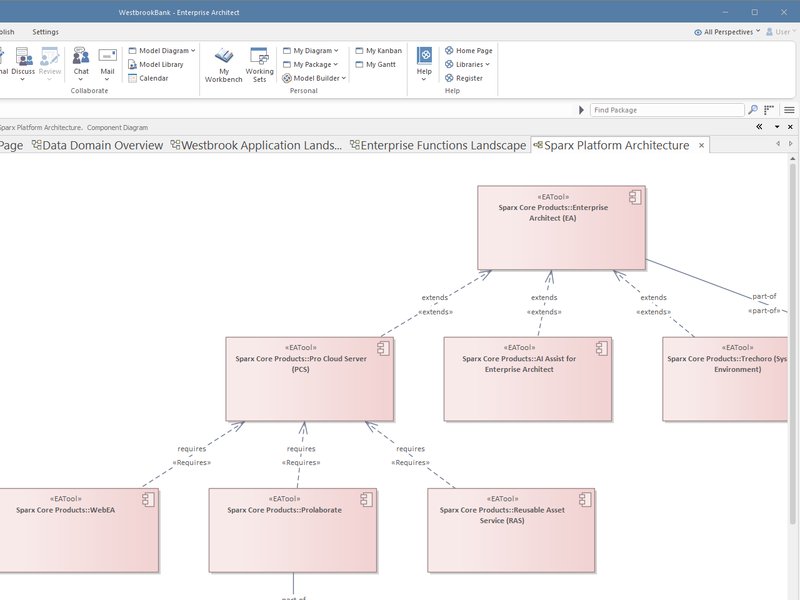
Today entities are typed into the model by hand from database schemas, glossaries and spreadsheets. AI-augmented, the architect decides the target structure (conceptual, logical and physical levels, naming conventions, how the levels link) and points AI at the schemas. AI builds the linked entities.
The skill is specifying the modeling convention clearly, and judging where a name and a meaning differ.
Settling what each system means by the same term
Today the definitions of "Customer" are compared in meetings and spreadsheets. AI-augmented, the architect asks AI to put each system's definition beside the glossary and show where they differ, then takes the differences to the data owners.
The skill is framing the comparison, and negotiating the meaning with the owners, which stays a human conversation.
Tracing lineage from source to report
Today lineage is traced one entity at a time until the time runs out. AI-augmented, the architect asks for the lineage of a critical data element, or for the producers and consumers of an entity, and AI returns the path through the model.
The skill is knowing which data elements are critical, and checking the modeled path against how the data really moves.
Finding critical data with no owner
Today missing owners, classifications and retention periods are discovered at audit. AI-augmented, the architect states what metadata a critical data element must carry and under which regime, and AI checks every element and lists those that fall short.
The skill is translating a regulation or internal policy into rules the model can check.
Showing what a platform change puts at risk
Today a migration plan relies on the people who remember which reports read from the platform. AI-augmented, the architect asks the model what is stored on a data warehouse or database engine, and which reports and processes depend on it.
The skill is asking the question at the right scope, and deciding what level of risk the business will accept.
Giving owners and stewards answers they can read
Today the CDO's questions go to the data architect, who builds a one-off view. AI-augmented, the architect decides which questions data leaders will ask and sets up views and plain-language answers they can reach without a Sparx EA license.
The skill is understanding the data leader's questions well enough to design the answers, and stating what each can claim.
Which tools help with this work, and when
The right tool depends on the job and on where the people who need the answers already work. For stakeholders it is usually the tool they already have open.
- Claude + AI Power Tools
The widest range of guided data architecture work: reverse-engineering the schemas, reconciling the glossaries, tracing lineage and checking for critical data with no owner, on the live repository.
- GitHub Copilot + AI Power Tools
The same work from VS Code, for architects who already work there.
- Kernaro Assist
Works inside Enterprise Architect as architects model, checking the metadata on critical data elements, such as owner, classification, retention and lineage.
- Kernaro AI Hub
Answers the producer, consumer, lineage and platform-risk questions across the whole data landscape.
- Prolaborate 6 with AI
Gives owners and stewards lineage and ownership views in a browser, with no EA modeling skills needed.
- Power BI
Dashboards for owners and stewards, in a tool they already open. Kernaro AI Hub is the recommended feed for anyone who can afford it, read live through the Kernaro Connector for Power BI.
- Microsoft 365 Copilot
Read-only. Owners and stewards can ask which business-critical entities have no documented owner in Teams or Outlook, answered from a published Power BI model or, with Kernaro AI Hub, through its read-only API.
The data landscape is trustworthy only when a person who understands the business stands behind what the model says.
The architect still owns the meaning
AI can confirm that a critical data element has an owner, a classification, and an unbroken lineage path. It cannot tell you whether that lineage reflects how the data actually moves, or whether your "Customer" entity means what the business thinks it means. It can traverse every relationship captured in the model, but if a relationship was never modeled, it won't warn you it's missing.
Closing that gap is the architect’s job: translating between what the business means and what the IT estate stores, and owning the consequences.
How we help
Train and mentor your architects
Training and mentoring that teach your architects to build the data picture from schemas and glossaries, trace lineage and check ownership, on your own repository, then stay with them until the new habits stick.
For ArchitectsBuild the model for you
Consulting for organizations that are capacity constrained or need results quickly. We build the data model in your repository from your schemas, glossaries and spreadsheets, and hand it over complete and current.
Build the model for you
Frequently asked questions
Does AI replace the data architect?
No. AI scales the data legwork: reconciling entities across systems, tracing lineage from source to report, drafting landscape views enterprise-wide. The architect still decides what a model is for, whether the lineage reflects how data actually moves, and what an entity truly means to the business.
What does the repository need before this works?
A governed Sparx EA repository where data entities carry consistent metadata and relationships across conceptual, logical, and physical levels. Ungoverned data produces fast, confident, wrong answers. We assess whether your repository is ready as part of the engagement and remediate the data foundation as needed.