
AI-Augmented Software Architecture
The codebase changes every day, and the architecture model describes it only as of the last time someone updated it. Engineers and product owners ask what implements a service, what an interface exposes and what breaks if a component changes. We help your architects answer from a UML model read from the code and kept in step with it, using AI on your Sparx EA repository.
Read the structure from the code, then keep it in step
The system is already described by its repositories, build and deployment pipelines, configuration and API definitions. The old way redraws that structure in the model by hand and falls behind. The modern way reads the sources and lets the model hold the structure and the dependencies.
- Components and interfaces are reverse-engineered from the code by the one person who knows the system
- Structure is typed into the model element by element and re-synced after a release, when someone has time
- Dependencies come from memory and tribal knowledge
- The component diagram on the wiki is older than the code it describes
- AI reads the repositories, configuration and API definitions into UML Component, Class and Deployment models
- The deployment view follows the pipelines and infrastructure definitions
- Dependencies across the codebase can be queried from the model
- The architect decides the level of abstraction and whether a dependency should exist
Where AI lands in software architecture work
These are the four use cases behind AI-Augmented Architecture, applied to a UML and component practice on Sparx EA.
Build the structure from real sources
Turn code, configuration, and existing documentation into properly stereotyped UML Component, Class, and Deployment models with typed attributes, interfaces, ports, and the elements that realize them, in your MDG, at the level of abstraction you direct.
AnalysisReverse-engineer and trace dependencies
Reverse-engineer source structure into the repository, then trace it across the real dependency graph: what components implement a service, what interfaces a component exposes, and "what breaks if we retire this?" The model ties in the repositories, API definitions and vendor documentation around it, with vulnerability databases for the libraries in use.
GovernanceKeep the model trustworthy
Check the model against your MDG as it changes: required tagged values present, stereotypes applied, relationships limited to what is permitted. The structure then rests on data that is complete and consistent, not on a diagram that quietly drifted.
Stakeholder EngagementBrief from the model
Generate business-readable component and integration views, change-impact summaries, and handoff specs straight from the governed repository. Engineers, product owners, and reviewers see consistent, linked content instead of a one-off slide.
What a software architect can now get done
With AI-Augmented Architecture, a software architect hands over the code, the build and deployment configuration and the API definitions, gives the instructions in a prompt, and reviews the UML model that comes back.
In Ryan Schmierer's experience, most of a software architect's effort goes to reverse-engineering and transcribing structure into the model. That is the time left for deciding what the structure should become.




Reading the structure out of the code
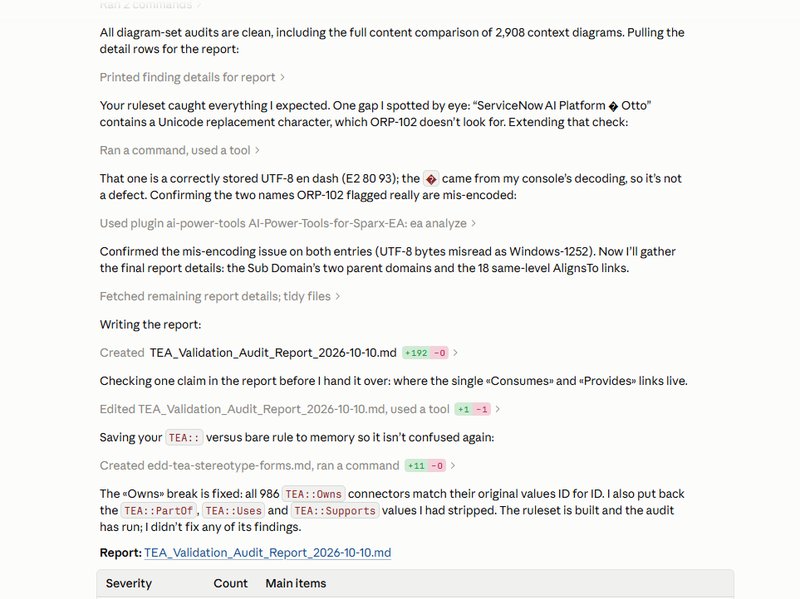
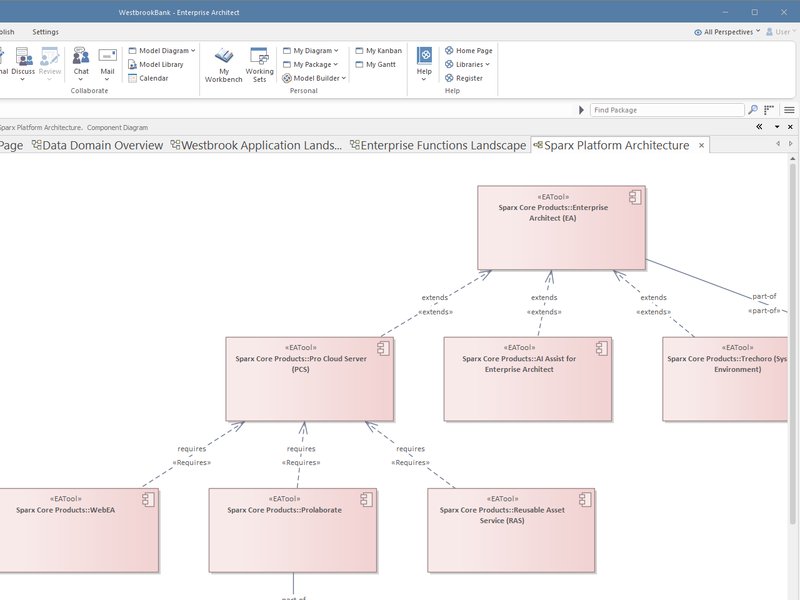
Today one person who knows the system reverse-engineers components and interfaces by hand and types them into the model. AI-augmented, the architect says what the model is for and at what level of abstraction, and AI reads the repositories, configuration and API definitions into UML component, class and deployment models with typed interfaces and ports.
The skill is choosing the level of abstraction, so the model shows the design and not the whole codebase.
Keeping the model in step as the code moves
Today the model is re-synced after a release when someone has time, and falls behind. AI-augmented, the architect has AI re-read the code after a release and update the model, then reviews what changed instead of redrawing it.
The skill is telling a change that reflects a design decision from one that is only churn.
Seeing where a change lands
Today dependencies come from memory and tribal knowledge. AI-augmented, the architect asks the model what implements a service, what an interface exposes and who consumes it, across the whole system.
The skill is judging whether a dependency should exist at all, which is a design question the model cannot answer for you.
Checking the design against your rules
Today layering rules and tagging standards are checked in review, by whoever remembers them. AI-augmented, the architect writes the rules down (required tags, stereotypes, permitted relationships, no dependency on a deprecated component), and AI checks the model and fixes the mechanical gaps.
The skill is turning design principles into rules that can be run, and knowing which reflect the real standard.
Showing how the system is deployed
Today deployment diagrams are drawn by hand for each review and fall behind the pipeline. AI-augmented, the architect names the audience, such as operations or a review board, and AI composes the deployment and integration views from the model and the pipeline and infrastructure definitions.
The skill is designing the view for its reader: what to show, what to leave out.
Writing the handoff
Today the handoff to engineers and product owners is a one-off document that is stale after the next release. AI-augmented, the architect states what the reader must be able to do with the handoff, and AI produces the component and integration views, change-impact summary and specification from the governed repository.
The skill is stating what the design must say, and reading the result critically before it goes out.
Which tools help with this work, and when
The right tool depends on the job and on where the people who need the answers already work. For stakeholders it is usually the tool they already have open.
- Claude + AI Power Tools
The widest range of guided software architecture work: reading the structure out of the code, keeping the model in step as the code moves and writing the handoff, on the live repository.
- GitHub Copilot + AI Power Tools
The same work from VS Code, for architects who already work there, close to the code.
- Kernaro Assist
Works inside Enterprise Architect as architects model, checking the design against your MDG, such as required tagged values, stereotypes and permitted relationships.
- Kernaro AI Hub
Answers the “what breaks if we change this interface?” questions across the whole repository.
- Prolaborate 6 with AI
Gives engineers and product owners component and integration views in a browser, with no EA modeling skills needed.
AI can take on tasks. The architect owns the architecture.
The architect still owns the design
AI can tell you a component model is complete, consistently typed, and standards-adherent. It cannot tell you whether the decomposition is sound, whether that dependency should exist, or whether the design will hold when the requirement shifts.
It can trace every dependency captured in the model, but if a dependency was never captured, it won't warn you it's missing. A repository built with the right symbols but the wrong semantics is just a tidier wrong answer.
Catching both is the architect’s job: translating between what the business needs and what the system does, making the design decision and owning the consequences.
How we help
Train and mentor your architects
Training and mentoring that teach your architects to read structure out of the code, keep the model in step with it and check the design against your rules, on your own repository, then stay with them until the new habits stick.
For ArchitectsBuild the model for you
Consulting for organizations that are capacity constrained or need results quickly. We build the software model in your repository from your code and configuration, and hand it over complete and current.
Build the model for you
Frequently asked questions
Does AI replace the architect in software architecture?
No. AI scales the data work: reverse-engineering code into the model, tracing dependencies across the structure, drafting component and class views. The architect still decides whether the decomposition is sound, whether a dependency should exist, and what the design should become.
What does the codebase need before this works?
A governed Sparx EA repository where components, interfaces, and dependencies carry consistent stereotypes and relationships in your MDG. A model built with the right symbols but the wrong semantics is just a tidier wrong answer. We assess whether your repository and standards are ready as part of the engagement and remediate the foundation as needed.