
AI-Augmented IT Architecture
IT architecture depends on a current picture of the estate: the platforms, services and infrastructure you run, and how they connect. Leaders ask what breaks if a platform is retired, whether a candidate platform fits the reference architecture, and what a cloud move touches. We help your architects answer from a model built from your cloud consoles, CMDB and infrastructure code, using AI on your Sparx EA repository.
Model the estate from the systems that already describe it
Cloud consoles, infrastructure code, the CMDB and inventories already describe the estate. The old way copies pieces of them into a model by hand. The modern way reads those sources and lets the model hold the relationships.
- Platforms, servers and services are keyed into the model from console screens and inventory spreadsheets
- Dependencies are traced one system at a time, from memory and from the people who built them
- Each candidate platform is checked against the reference architecture by reading documents side by side
- The model lags the estate by however long it has been since the last refresh cycle
- AI reads cloud-console exports, Terraform state, CMDB data and inventories into typed, connected technology components
- The dependency graph shows what relies on a platform before you commit to retiring it
- Candidate platforms are checked against your reference architecture and standards, with the trade-offs listed
- The architect reviews the findings and decides which standard still fits
Where AI lands in IT architecture work
These are the four use cases behind AI-Augmented Architecture, applied to an IT architecture practice.
Build the landscape as data
Reverse-engineer cloud-console exports, Terraform state, CMDB data, and infrastructure inventories into properly stereotyped, fully connected technology components. The result is a baseline of what you run, in your MDG, at estate scale.
AnalysisTrace impact and evaluate options
Answer "what breaks if we retire this platform?" by walking the real dependency graph, and check candidate platforms against your reference architectures and standards, with the evidence behind each trade-off. The model ties in the CMDB, cloud consoles and vendor documentation, and vulnerability databases for the platforms in question.
GovernanceKeep the landscape conformant
Check the estate against your standards and reference architecture as it changes: required tagged values, naming, and mandated technology patterns. Decisions then rest on a model that is complete and consistent, not on a stale diagram.
Stakeholder EngagementBrief owners from the model
Generate technology roadmaps, landscape summaries, and impact narratives straight from the governed model, in language infrastructure owners and sponsors can validate without a diagram tutorial.
What an IT architect can now get done
With AI-Augmented Architecture, an IT architect hands over the cloud-console exports, infrastructure code and CMDB data, gives the instructions in a prompt, and reviews the technology model that comes back.
In Ryan Schmierer's experience, most of an IT architect's week goes to capturing and reconciling the landscape. That is the time that could go to standards, risk and direction.




Baselining what you run
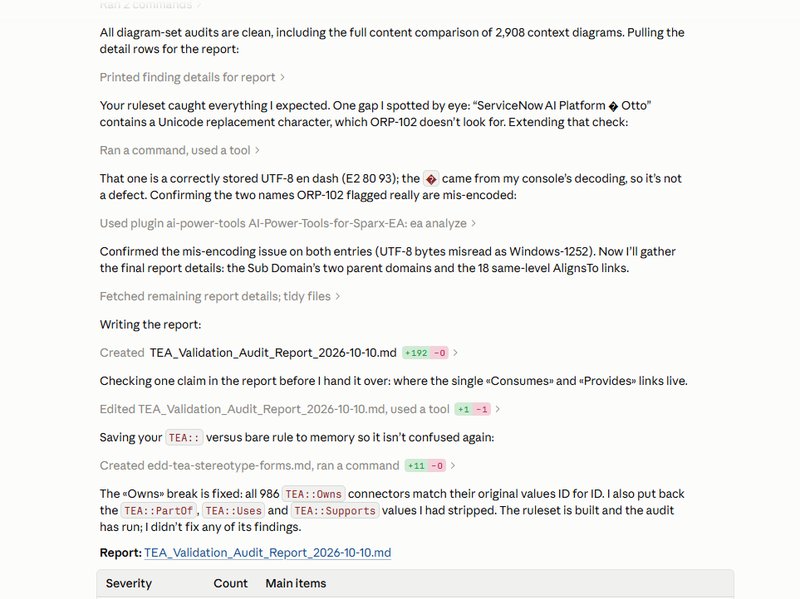
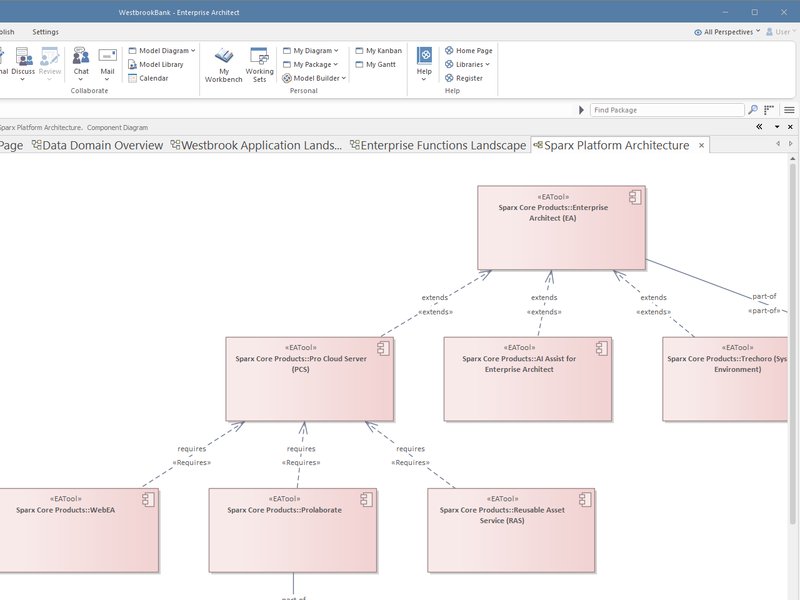
Today the estate is keyed into the model from console screens, inventory spreadsheets and CMDB extracts. AI-augmented, the architect says what the baseline is for (which scope, what level of detail) and points AI at the cloud-console exports, Terraform state and CMDB data. AI creates typed, connected technology components.
The skill is scoping a baseline to its purpose and knowing which source to trust when two disagree.
Saying what breaks if a platform goes
Today an architect asks the platform team and reads old diagrams. AI-augmented, the architect asks the model for everything that relies on the platform and reads the list with its evidence.
The skill is framing the question (what counts as relying on it) and noticing what was never captured.
Checking a candidate platform against the reference architecture
Today the options and the reference architecture are read side by side in a review meeting. AI-augmented, the architect states the criteria that matter and the options in play, and AI compares each option with your reference architecture and standards and lists the trade-offs with evidence.
The skill is stating criteria that matter, and judging whether the reference architecture still fits where the business is going.
Holding the landscape to your standards
Today conformance is checked by reading diagrams, and exceptions are found late. AI-augmented, the architect writes the standard as rules (required tagged values, naming, mandated technology patterns). AI checks the estate as it changes and fixes the mechanical gaps.
The skill is writing rules the model can run, and deciding which findings are exceptions and which need action.
Drawing the landscape view people ask for
Today each landscape or deployment diagram is drawn by hand for a review, and looks different every time. AI-augmented, the architect names the audience and the question the view must answer, and AI composes it from the model.
The skill is designing a view for its reader: what to include, what to leave out, how much detail.
Briefing owners and sponsors
Today the roadmap and landscape summary are slides assembled by hand and out of date soon after. AI-augmented, the architect states what the sponsor has to decide, and AI drafts the roadmap or summary from the governed model and publishes it where sponsors already look.
The skill is writing for the decision, and checking what each claim rests on.
Which tools help with this work, and when
The right tool depends on the job and on where the people who need the answers already work. For stakeholders it is usually the tool they already have open.
- Claude + AI Power Tools
The widest range of guided IT architecture work: baselining the estate, checking candidate platforms against the reference architecture and drawing the landscape views people ask for, on the live repository.
- GitHub Copilot + AI Power Tools
The same work from VS Code, for architects who already work there.
- Kernaro Assist
Works inside Enterprise Architect as architects model, checking the landscape against your standards and reference architecture, such as required tagged values and naming.
- Kernaro AI Hub
Answers the “what breaks if a platform goes?” questions across the whole landscape.
- Prolaborate 6 with AI
Gives infrastructure owners and sponsors landscape views in a browser, with no EA modeling skills needed.
- Power BI
Dashboards for infrastructure owners and sponsors, in a tool they already open. Kernaro AI Hub is the recommended feed for anyone who can afford it, read live through the Kernaro Connector for Power BI.
- Microsoft 365 Copilot
Read-only. Infrastructure owners and sponsors can ask what a platform retirement touches in Teams or Outlook, answered from a published Power BI model or, with Kernaro AI Hub, through its read-only API.
AI can take on tasks. The architect owns the technology landscape.
The architect still owns the decision
AI can confirm that your landscape conforms to the reference architecture: the dependencies are mapped, the tagged values are filled, the standards are met. It cannot tell you whether the dependency it found is the one that actually matters at 2 a.m., whether a platform that conforms on paper is the right choice for where the business is going, or whether the reference architecture itself still fits.
It traces every dependency captured in the model, but if one was never captured, it won't warn you it's missing.
Closing that gap is the architect’s job: translating between what the business needs and what the IT estate does, making the platform decision and owning the consequences.
How we help
Train and mentor your architects
Training and mentoring that teach your architects to baseline the estate from the systems that describe it, trace dependencies and hold the landscape to your standards, on your own repository, then stay with them until the new habits stick.
For ArchitectsBuild the model for you
Consulting for organizations that are capacity constrained or need results quickly. We build the technology landscape in your repository from your cloud consoles, CMDB and infrastructure code, and hand it over complete and current.
Build the model for you
Frequently asked questions
Does AI replace the architect in IT architecture?
No. AI scales the data work: capturing the landscape, tracing dependencies, checking options against the reference architecture across the whole estate. The architect still decides which dependency actually matters, whether a conforming platform is the right call, and what 'good' looks like.
What does the landscape model need before this works?
A governed Sparx EA repository where platforms, services, and infrastructure carry consistent metadata and relationships. Ungoverned data produces fast, confident, wrong answers. We assess whether your repository is ready as part of the engagement and remediate the data foundation as needed.